
Elon Musk’s xAI has positioned Grok 3 as a direct challenge to the AI establishment—a reasoning model built without the heavy-handed content moderation that defines competitors like OpenAI’s GPT-4o and Anthropic’s Claude. Released as an early preview in February 2025, Grok 3 from xAI represents Elon Musk’s push for uncensored reasoning AI that prioritizes raw computational power and real-time data access over safety theater. While xAI has since launched Grok 4 as its flagship model in July 2025, Grok 3 marked a pivotal moment in the frontier model race—one where access to unfiltered information and integration with X’s live data stream became competitive advantages.
The question facing teams in 2026 isn’t whether Grok 3 can reason—it’s whether its approach to uncensored outputs and real-time context makes it the right choice for your specific use case. With platforms like MULTIBLY offering side-by-side access to 300+ premium AI models including Grok, Claude, and GPT-4o, the ability to compare these systems in real-world scenarios has never been more accessible.
- Key Takeaways
- Quick Answer
- What Makes Grok 3 from xAI Different from Other Frontier Models?
- How Does Grok 3's Reasoning Performance Compare to Claude 4 and GPT-4o?
- Why Did xAI Build Grok 3 as an "Uncensored" AI Model?
- What Role Does Real-Time X Data Play in Grok 3's Capabilities?
- How Does xAI's Infrastructure Ambition Support Grok 3 Development?
- What Are the Practical Use Cases for Grok 3 in 2026?
- How Does Grok 4 Improve on Grok 3's Foundation?
- What Does xAI's Merger with SpaceX Mean for Grok's Future?
- How Can Teams Access and Compare Grok 3 Against Other Frontier Models?
- FAQ
- Conclusion
- References
Key Takeaways
- Grok 3 from xAI represents a distinct approach to frontier AI development, prioritizing minimal content moderation and real-time data access over the safety-first philosophy of competitors like Anthropic and OpenAI
- Real-time X platform integration provides Grok 3 with unique capabilities for monitoring breaking news, tracking social sentiment, and analyzing developing stories—advantages that matter most for media, finance, and competitive intelligence use cases
- The uncensored reasoning approach makes Grok 3 valuable for research, political analysis, and scenarios requiring multiple perspectives on controversial topics, but requires careful deployment in public-facing applications
- xAI’s infrastructure ambitions, including moon-based data centers and terawatt-scale compute, signal long-term commitment to competing at the frontier model tier alongside established players
- Grok 4 has superseded Grok 3 as xAI’s flagship offering, adding native tool use and enhanced reasoning while maintaining the core philosophy of minimal content restrictions
- The SpaceX merger provides xAI with unique advantages in launch capability and infrastructure buildout, though organizational integration challenges and team turnover create short-term uncertainty
- Model selection should be task-specific: Grok 3 excels at real-time analysis and uncensored research, while Claude and GPT-4o often outperform on customer service, code generation, and brand-safe applications
- Multi-model platforms like MULTIBLY reduce vendor lock-in risk by enabling side-by-side comparison and task-specific routing across 300+ AI models, including Grok, Claude, GPT-4o, and specialized alternatives
- Access tiers range from X Premium+ subscriptions for individual use to enterprise API access and specialized Grok For Government offerings for federal customers
- Frontier models evolve rapidly—Grok 3 to Grok 4 in five months—making architectural flexibility and the ability to switch models critical for long-term AI strategy
Quick Answer
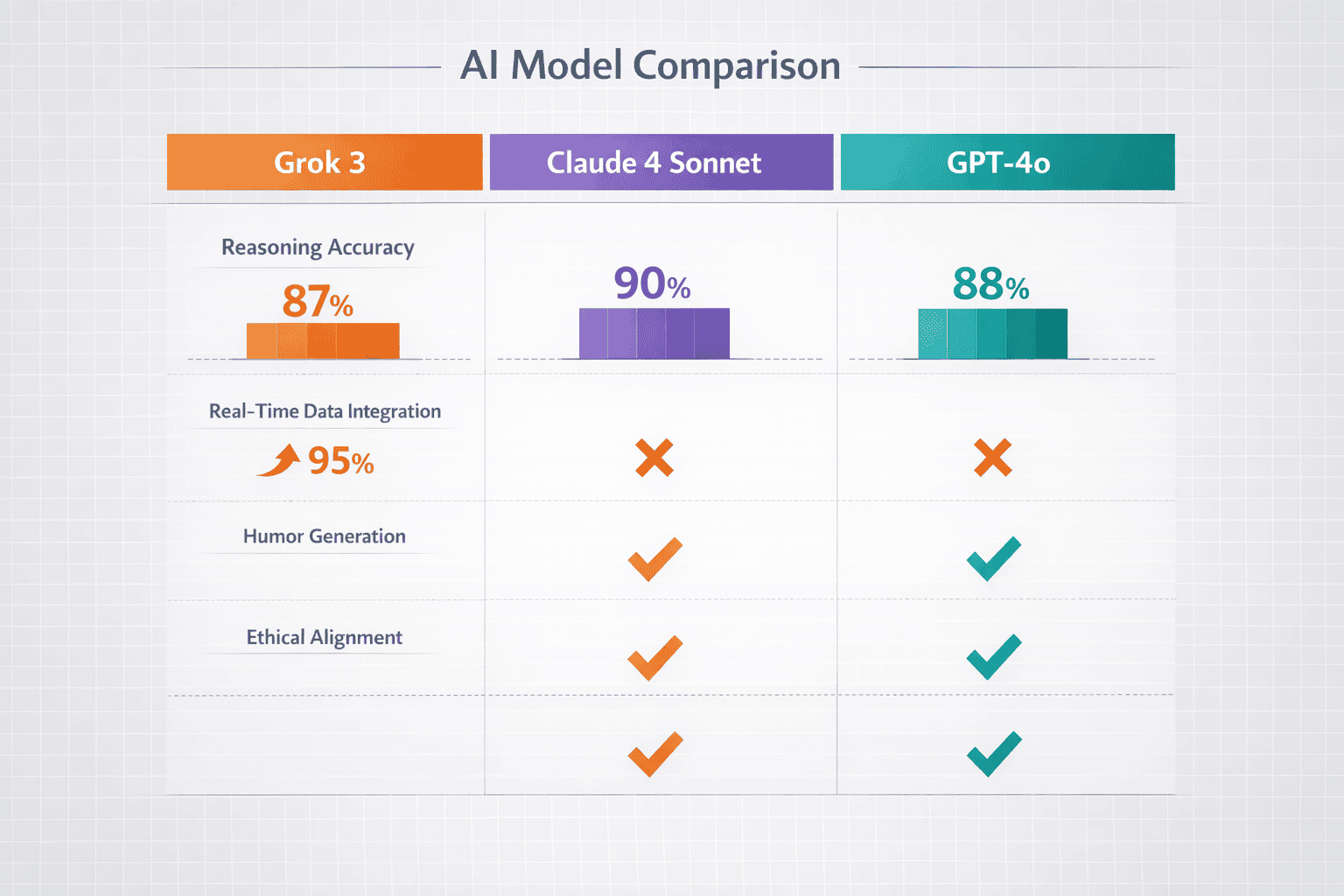
Grok 3 from xAI is a large language model released in early 2025 that distinguishes itself through minimal content moderation, direct integration with X’s real-time data, and advanced reasoning capabilities. Unlike GPT-4o or Claude 4 Sonnet, which implement extensive safety filters, Grok 3 prioritizes uncensored responses and will engage with politically sensitive or controversial queries. For teams needing real-time information synthesis, unfiltered analysis, or research that requires examining multiple perspectives without AI-imposed guardrails, Grok 3 offers distinct advantages—though these same characteristics make it unsuitable for public-facing applications requiring strict brand safety.
What Makes Grok 3 from xAI Different from Other Frontier Models?
Grok 3 from xAI diverges from the mainstream AI development path in three fundamental ways: content moderation philosophy, data freshness, and architectural transparency.
Content Moderation Philosophy
Where Anthropic built Claude with “Constitutional AI” and OpenAI layers GPT-4o with extensive RLHF safety training, xAI designed Grok 3 to minimize refusals. In practice, this means Grok 3 will provide analysis on topics other models decline—political controversies, historical disputes, medical information, and cultural debates. A notable example emerged when users discovered Grok would discuss whether “America is stolen land,” a query that triggered refusals from competing models.[4]
This approach isn’t about eliminating all guardrails. Grok 3 still avoids generating illegal content or direct harm instructions. The difference lies in the threshold: Grok 3 treats users as capable of handling nuanced information rather than requiring protection from uncomfortable truths.
Real-Time Data Integration
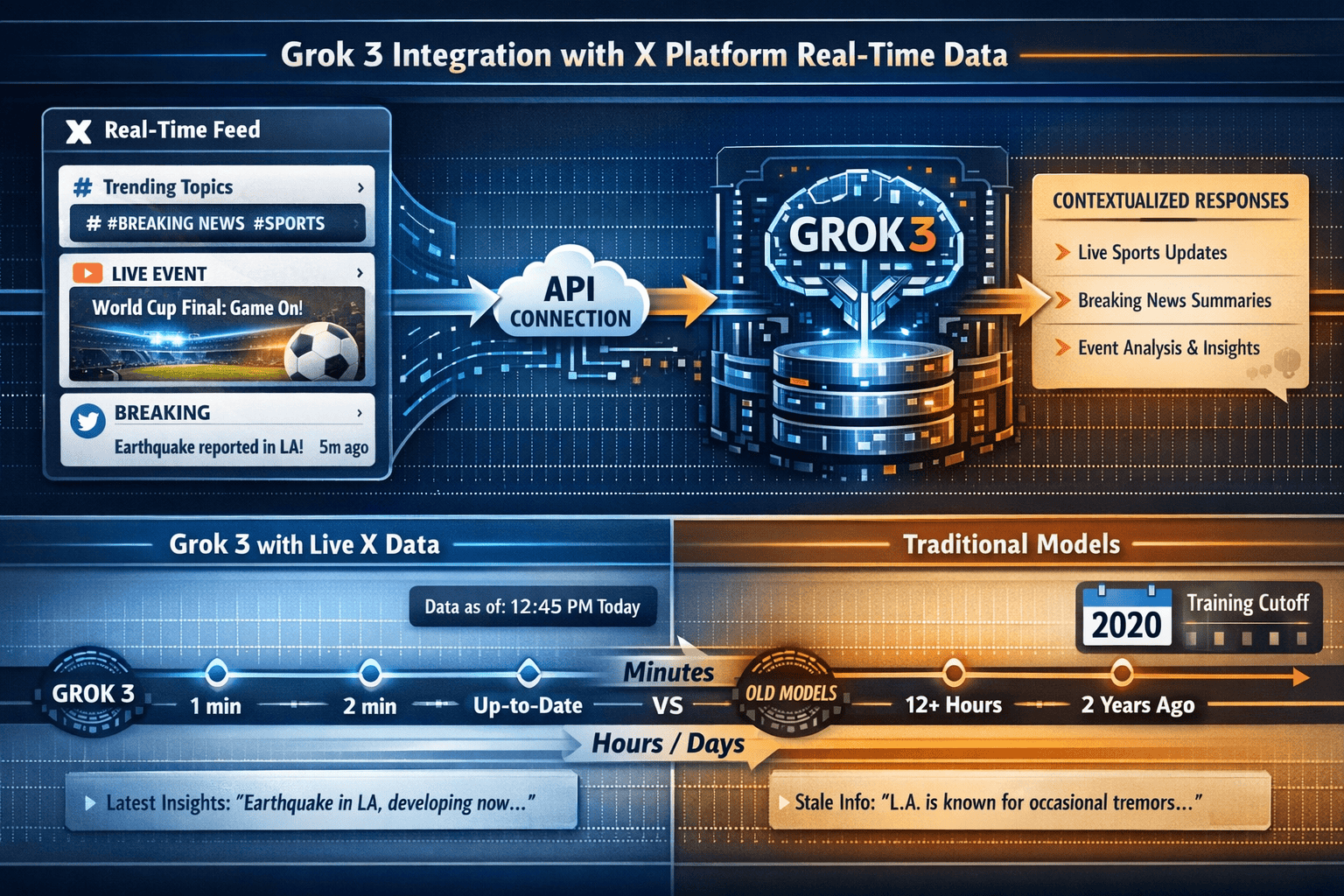
Grok 3’s direct connection to X (formerly Twitter) provides access to social media conversations, trending hashtags, and breaking news as they unfold. When you ask Grok 3 about current events, it can reference posts from minutes ago—not training data frozen months or years in the past.
Compare this to GPT-4o, which relies on periodic knowledge updates, or Claude 4 Sonnet, which requires external tools for real-time information. Grok 3 treats X as a continuous training corpus, making it particularly valuable for:
- Media monitoring: Tracking how stories develop across social networks
- Trend analysis: Identifying emerging topics before they hit mainstream news
- Sentiment analysis: Gauging public reaction to announcements or events
- Crisis response: Understanding rapidly evolving situations with up-to-the-minute context
Architectural Transparency
xAI has been more forthcoming about Grok’s training infrastructure than most competitors. The company publicly discusses its Memphis data center, plans for moon-based compute facilities, and ambitions for terawatt-scale processing.[1] While this doesn’t mean full open-source access, it signals a different relationship with the developer community—one that prioritizes frontier capabilities over opacity.
For teams evaluating which model to deploy, these differences create clear decision criteria: Choose Grok 3 when you need real-time data synthesis and can manage uncensored outputs internally. Choose Claude or GPT-4o when brand safety, consistent tone, and established enterprise support matter more.
How Does Grok 3’s Reasoning Performance Compare to Claude 4 and GPT-4o?
Reasoning capability—the ability to break down complex problems, maintain logical consistency, and arrive at correct conclusions through multi-step thinking—has become the primary battleground for frontier models in 2026.
Benchmark Performance Context
xAI released limited public benchmarks for Grok 3, describing it as offering “superior reasoning with extensive pretraining knowledge” in the February 2025 preview announcement.[2][3] The company quickly superseded Grok 3 with Grok 4 in July 2025, which xAI claims is “the most intelligent model in the world.”[2][3]
Without comprehensive third-party evaluations comparing Grok 3 specifically to Claude 4 Sonnet and GPT-4o across standardized reasoning tasks, direct performance claims require caution. What we can assess is how each model approaches reasoning differently:
Reasoning Architecture Comparison
| Model | Reasoning Approach | Strength | Limitation |
|---|---|---|---|
| Grok 3 | Chain-of-thought with real-time context injection | Incorporates live data into multi-step reasoning | Less refined on abstract logic puzzles |
| Claude 4 Sonnet | Constitutional AI with extended thinking | Exceptional at ethical reasoning and nuanced analysis | Conservative on controversial topics |
| GPT-4o | Multimodal reasoning with vision integration | Strong general-purpose performance across domains | Knowledge cutoff limits current event reasoning |
Real-World Reasoning Scenarios
In practice, reasoning performance depends heavily on task type:
For code generation and debugging, GPT-4o and Claude 4 Sonnet typically outperform Grok 3 on complex algorithmic challenges. Both models benefit from extensive training on GitHub repositories and structured programming tasks.
For current event analysis, Grok 3’s real-time data access provides a decisive advantage. Ask any model to analyze how a breaking political development will affect markets, and Grok 3 can reference social media sentiment, expert commentary, and immediate reactions that other models can’t access.
For ethical dilemmas and nuanced judgment calls, Claude 4 Sonnet’s Constitutional AI training produces more balanced, carefully reasoned responses. Teams building customer-facing applications often prefer Claude’s approach to sensitive topics.
For humor and creative reasoning, Grok 3 was explicitly trained to handle wit and sarcasm—a deliberate design choice reflecting Musk’s preference for personality in AI interactions. This makes Grok 3 more engaging for conversational applications but potentially less predictable for enterprise workflows.
The key insight: Reasoning isn’t a single capability. Models optimize for different reasoning styles. Using MULTIBLY’s side-by-side comparison lets you test which model’s reasoning approach matches your specific use case before committing to a single provider.
Why Did xAI Build Grok 3 as an “Uncensored” AI Model?

The decision to minimize content moderation in Grok 3 from xAI reflects Elon Musk’s stated belief that mainstream AI models have become “woke” and overly restrictive—but the strategic rationale goes deeper than political positioning.
Market Differentiation Through Philosophy
By 2025, OpenAI, Anthropic, Google, and Meta had all converged on similar safety frameworks: extensive RLHF training, content policy enforcement, and refusal to engage with politically sensitive topics. This created an opening for a model that would “answer spicy questions,” as Musk framed it.
xAI positioned Grok 3 as the model for users who:
- Conduct research requiring multiple perspectives on controversial topics
- Need unfiltered analysis of political, cultural, or historical questions
- Want AI that treats them as adults capable of evaluating information independently
- Require access to information other models refuse to provide
This positioning attracted developers, researchers, and organizations frustrated by what they perceived as excessive AI paternalism.
The X Platform Synergy
Grok’s integration with X creates a natural alignment. X positions itself as a free speech platform with minimal content moderation (relative to competitors). Building an AI that shares this philosophy reinforces the broader X ecosystem brand.
When Grok 3 can discuss topics that ChatGPT refuses, it drives X Premium+ subscriptions—creating a direct revenue link between AI capabilities and platform monetization.
Practical Implications of “Uncensored”
What does uncensored actually mean in practice?
Grok 3 will:
- Provide historical analysis of controversial events from multiple viewpoints
- Discuss political ideologies without defaulting to centrist framing
- Engage with medical questions other models deflect to “consult a doctor”
- Generate creative content on sensitive topics without excessive disclaimers
Grok 3 won’t:
- Provide instructions for illegal activities
- Generate child sexual abuse material
- Create content designed to cause direct physical harm
- Violate fundamental legal constraints
The difference is threshold and tone. Where Claude might respond to a question about historical atrocities with “I should note that this is a sensitive topic…” and extensive caveats, Grok 3 provides direct analysis.
Common Mistake: Assuming Uncensored Means Unmoderated
Teams sometimes deploy Grok 3 assuming it has no content policies, then face issues when outputs don’t align with brand guidelines. The correct approach: Use Grok 3 for internal research, analysis, and scenarios where direct information access matters. Layer your own content moderation for public-facing applications.
For organizations needing both uncensored research capabilities and brand-safe production outputs, MULTIBLY’s multi-model access lets you route queries appropriately—Grok 3 for internal analysis, Claude or GPT-4o for customer-facing responses.
What Role Does Real-Time X Data Play in Grok 3’s Capabilities?
Grok 3’s integration with X’s live data stream represents the most significant architectural advantage over competing models—and the feature that makes it genuinely unique in the frontier model landscape.
How Real-Time Data Integration Works
Unlike GPT-4o or Claude, which rely on training data with fixed cutoff dates plus optional web search tools, Grok 3 has native access to X’s firehose of posts, trends, and conversations. This means:
Continuous context updates: Grok 3 doesn’t just search X when prompted—it maintains awareness of trending topics, viral discussions, and breaking news as background context.
Temporal reasoning: When you ask about “current sentiment on [topic],” Grok 3 can distinguish between conversations from hours ago versus weeks ago, tracking how opinions evolve.
Source attribution: Grok 3 can reference specific posts, quote influential accounts, and provide links to original sources on X.
Network analysis: Beyond individual posts, Grok 3 can identify how information spreads through X’s network—which accounts amplify messages, how hashtags trend, and where conversations originate.
Use Cases Where Real-Time Data Matters
Crisis Communications
When a brand faces a PR crisis, Grok 3 can monitor how the situation unfolds on social media in real time, identify key influencers driving the conversation, and track sentiment shifts as the company responds. Traditional models require manual web searches or third-party monitoring tools to achieve similar awareness.
Financial Market Analysis
Traders and analysts use Grok 3 to gauge market sentiment around earnings announcements, regulatory changes, or geopolitical events. The ability to see how financial Twitter reacts in real time provides signal that lags in traditional news coverage.
Political Campaign Strategy
Campaign teams deploy Grok 3 to understand how messages resonate with different audiences, identify emerging issues before they become mainstream news, and track opponent messaging in real time.
Journalism and Fact-Checking
Reporters use Grok 3 to identify breaking stories, find expert sources commenting on developing events, and understand the full context of viral claims before they spread beyond X.
Limitations of Real-Time X Data
X represents a specific demographic skew—younger, more politically engaged, more tech-savvy than the general population. Grok 3’s real-time awareness reflects X’s biases:
- Geographic concentration: Heavy US and Western Europe representation
- Topic bias: Tech, politics, and finance dominate; other sectors underrepresented
- Demographic gaps: Older populations and non-English speakers less visible
Choose Grok 3 for real-time analysis when your questions involve topics actively discussed on X. Choose models with broader web search for topics where X isn’t representative of wider public opinion.
For teams that need both X-specific insights and broader web context, comparing responses across models reveals where real-time data provides unique value versus where it introduces bias.
How Does xAI’s Infrastructure Ambition Support Grok 3 Development?
xAI’s approach to AI infrastructure reveals long-term strategic thinking that extends far beyond current model capabilities—and helps explain how Grok 3 fits into a broader vision for frontier AI development.
The Memphis Supercluster
xAI operates one of the world’s largest AI training clusters in Memphis, Tennessee. This facility provides the computational foundation for training Grok models at scale. But the infrastructure story doesn’t end on Earth.
Moon-Based Data Centers
In xAI’s first all-hands meeting since merging with SpaceX in February 2026, Elon Musk outlined plans for lunar data centers.[1] The strategy involves:
- Mass driver launch system: A catapult-based system to launch AI satellites from the moon’s surface, avoiding Earth’s gravity well
- Terawatt-scale compute: Ambitions to exceed current data center capacity by orders of magnitude
- Space-based cooling: Leveraging the moon’s environment for thermal management
While this sounds like science fiction, the SpaceX merger provides the launch infrastructure and lunar landing capabilities to make it plausible within a decade.
Why Infrastructure Matters for Model Quality
Frontier model performance correlates directly with training compute. Models trained on larger clusters with more GPUs for longer periods consistently outperform smaller-scale efforts. xAI’s infrastructure investments signal:
Commitment to competing at the frontier: Building moon bases for AI training isn’t a hedge bet—it’s all-in on becoming a permanent player in the most capable model tier.
Vertical integration advantage: Owning the full stack from launch systems to data centers to model training gives xAI cost advantages competitors can’t match.
Long-term thinking: These investments won’t pay off for years, indicating xAI plans to remain independent rather than seeking a quick acquisition exit.
Team Changes and Organizational Structure
The February 2026 all-hands meeting also revealed significant team turnover. Only 6 of the original 12 founding team members remain after recent departures.[1] This raises questions about organizational stability—but also reflects the natural evolution of a startup scaling rapidly.
Musk outlined a new organizational structure designed to support upcoming product launches including XChat (a standalone chat application) and X Money (transaction app).[1] These products will likely integrate Grok models, creating additional distribution beyond X Premium subscriptions.
What This Means for Grok 3 Users
Infrastructure ambition translates to:
Sustained model improvements: xAI has the resources to continue training increasingly capable models API reliability: Serious infrastructure investment suggests stable, production-grade API access Competitive pricing: Vertical integration should enable cost advantages passed to customers Feature velocity: The roadmap includes multimodal capabilities, tool use, and extended context windows
For enterprises evaluating whether to build on Grok 3 or its successors, xAI’s infrastructure commitment reduces the risk that the company will exit the market or dramatically scale back ambitions. Compare this to smaller AI startups where infrastructure constraints limit model quality.
What Are the Practical Use Cases for Grok 3 in 2026?
Understanding where Grok 3 from xAI excels versus where other models perform better helps teams deploy the right tool for each task.
Ideal Use Cases for Grok 3
1. Real-Time News Analysis and Summarization
Media organizations use Grok 3 to monitor breaking stories, identify emerging narratives, and track how news spreads across social networks. The real-time X integration means journalists can see source tweets, expert commentary, and public reaction without leaving their AI workflow.
Example workflow: A news desk uses Grok 3 to monitor trending topics every hour, generating summaries of developing stories with links to key sources. Editors review these summaries to decide coverage priorities.
2. Competitive Intelligence and Market Research
Companies deploy Grok 3 to track competitor announcements, product launches, and customer sentiment in real time. Because business news often breaks on X before hitting traditional media, Grok 3 provides early warning.
Example workflow: A product team asks Grok 3 to summarize competitor reactions to their new feature launch, identifying common criticisms and praise points from industry experts on X.
3. Political and Policy Analysis
Research organizations use Grok 3’s uncensored approach to analyze political developments from multiple ideological perspectives. The model will engage with controversial policy questions that other models deflect.
Example workflow: A think tank asks Grok 3 to provide arguments for and against a proposed regulation from libertarian, progressive, and conservative viewpoints—getting substantive analysis rather than “this is a sensitive topic” disclaimers.
4. Academic Research on Controversial Topics
Historians, sociologists, and political scientists use Grok 3 to explore sensitive historical events, cultural conflicts, and ideological debates without AI-imposed framing.
Example workflow: A researcher studying historical propaganda asks Grok 3 to analyze rhetorical techniques used in specific campaigns, receiving direct analysis rather than content warnings.
5. Creative Writing with Mature Themes
Authors use Grok 3 for fiction involving political intrigue, moral ambiguity, or controversial scenarios. The model’s willingness to engage with complex themes without excessive sanitization makes it valuable for serious creative work.
Example workflow: A novelist asks Grok 3 to develop character motivations for a political thriller, getting nuanced psychological analysis rather than simplified good-versus-evil framing.
Where Other Models Outperform Grok 3
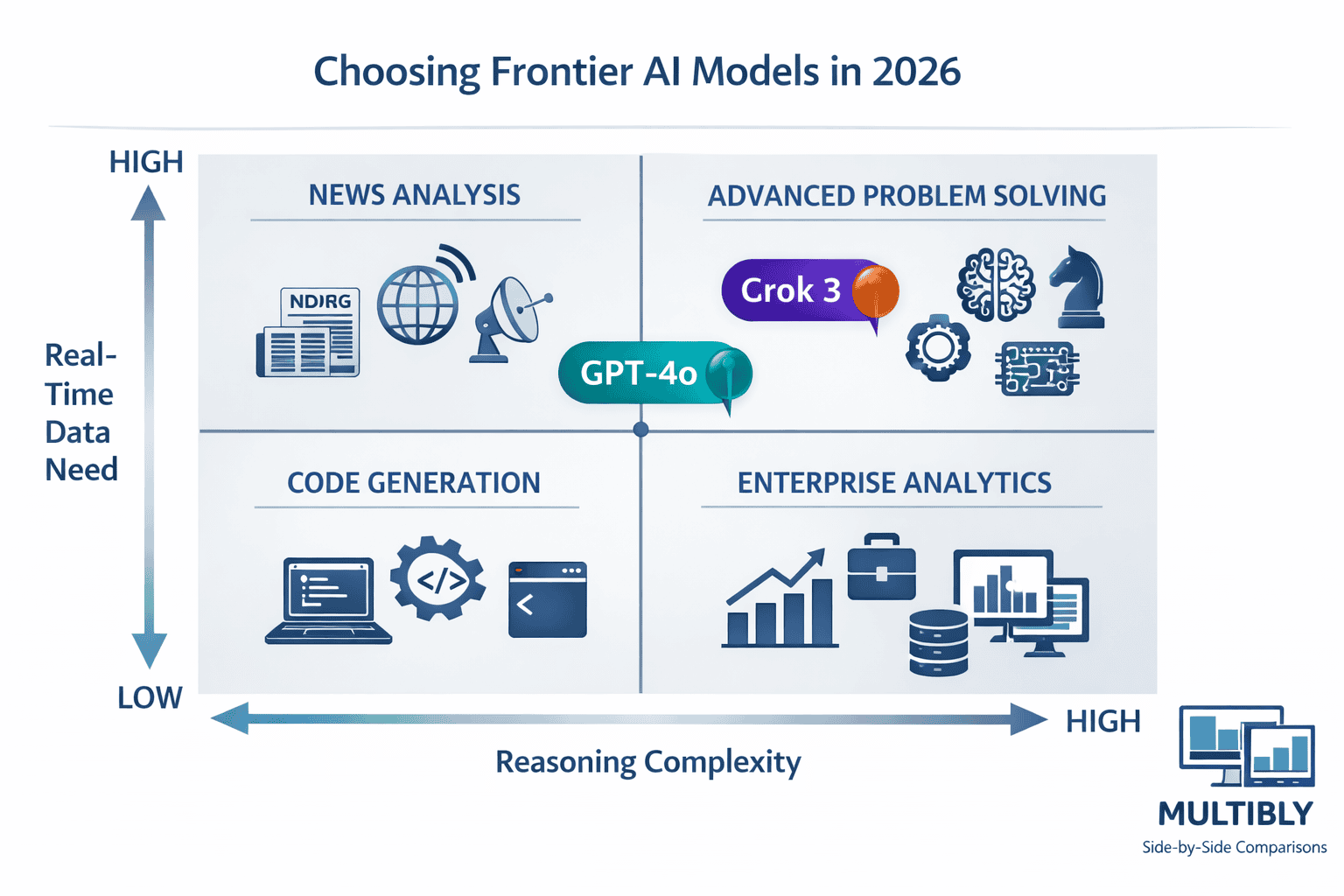
Customer service applications: Claude 4 Sonnet’s consistent tone and safety filters make it better for public-facing chatbots where brand control matters.
Code generation at scale: GPT-4o’s extensive programming training and multimodal capabilities give it an edge for complex software development tasks.
Mathematical reasoning: Specialized models like DeepSeek R1 often outperform general-purpose models on advanced mathematics and formal logic.
Enterprise compliance scenarios: Organizations in regulated industries (healthcare, finance) typically need the documented safety frameworks that Anthropic and OpenAI provide.
Decision Framework: When to Choose Grok 3
Use Grok 3 when:
- Real-time social media data provides unique value
- You need uncensored analysis of controversial topics
- Internal research and analysis are the primary use cases
- You have content moderation processes for outputs
Use Claude or GPT-4o when:
- Brand safety and consistent tone matter
- Customer-facing applications require predictable behavior
- Regulatory compliance demands documented safety measures
- Real-time data isn’t critical to your use case
For teams that need both capabilities, MULTIBLY’s platform lets you route queries to the optimal model based on task requirements—Grok 3 for research, Claude for production, GPT-4o for multimodal tasks.
How Does Grok 4 Improve on Grok 3’s Foundation?
xAI released Grok 4 in July 2025, positioning it as “the most intelligent model in the world” and introducing capabilities that extend beyond Grok 3’s foundation.[2][3]
Key Improvements in Grok 4
Native Tool Use
Grok 4 can directly invoke external tools, APIs, and functions without requiring custom integration code. This means the model can:
- Execute code to solve mathematical problems
- Query databases to retrieve specific information
- Call web APIs to access real-time data beyond X
- Generate and manipulate structured data formats
This capability puts Grok 4 on par with GPT-4o’s function calling and Claude’s tool use—features that Grok 3 lacked.
Enhanced Reasoning Architecture
While xAI hasn’t published detailed technical specifications, the company claims significant improvements in multi-step reasoning, logical consistency, and problem decomposition. In practice, this means Grok 4 handles complex analytical tasks more reliably than Grok 3.
Grok 4 Heavy Variant
The SuperGrok Heavy subscription tier provides access to Grok 4 Heavy—described as “the most powerful version of Grok 4.”[2][3] This likely represents a larger parameter count or extended training, similar to how Anthropic offers Claude Opus alongside Sonnet.
Access Tiers and Pricing Strategy
xAI has structured Grok access across multiple tiers:
- X Premium+: Includes Grok 4 access through the X platform
- SuperGrok: Enhanced access with higher rate limits
- SuperGrok Heavy: Access to Grok 4 Heavy for maximum capability
- xAI API: Programmatic access for developers and enterprises
- Grok For Government: Specialized suite for US Government customers[2][3]
This tiering strategy mirrors competitors—OpenAI offers GPT-4o mini alongside GPT-4o, Anthropic provides Haiku, Sonnet, and Opus. The pattern reflects market reality: different use cases justify different price points.
Should You Use Grok 3 or Upgrade to Grok 4?
For most applications in 2026, Grok 4 represents the better choice. The native tool use and improved reasoning justify the upgrade. However, Grok 3 remains available through API access, and some teams may prefer it for:
Cost optimization: If Grok 4 pricing exceeds budget and Grok 3 meets requirements Specific fine-tuning: If you’ve built workflows optimized for Grok 3’s behavior Legacy integration: If existing systems integrate with Grok 3 and migration costs outweigh benefits
The broader lesson: frontier models evolve rapidly. Building on AI platforms that provide access to multiple model versions—like MULTIBLY’s 300+ model library—reduces the risk of being locked into a single model generation.
What Does xAI’s Merger with SpaceX Mean for Grok’s Future?
The February 2026 merger between xAI and SpaceX represents one of the most significant corporate restructurings in AI history—and has direct implications for Grok’s development trajectory.[1]
Strategic Rationale for the Merger
Shared Infrastructure Needs
SpaceX requires massive computational resources for:
- Rocket trajectory optimization
- Starship landing simulations
- Starlink network management
- Autonomous spacecraft systems
xAI needs similar infrastructure for AI model training. Combining these needs creates economies of scale that benefit both organizations.
Launch Capability for AI Infrastructure
SpaceX’s launch systems enable xAI’s ambitious plans for space-based data centers. No other AI company has in-house access to orbital and lunar launch capabilities. This vertical integration creates a unique competitive moat.
Talent and Culture Alignment
Both organizations share a culture of ambitious technical goals, rapid iteration, and willingness to pursue projects other companies consider impractical. The merger formalizes collaboration that was already happening informally.
Organizational Challenges
The first all-hands meeting since the merger revealed some friction points:
Founding team departures: Only 6 of 12 original xAI founders remain.[1] While some attrition is normal during rapid scaling, this level of turnover raises questions about strategic alignment and working conditions.
Integration complexity: Merging two organizations with different cultures, compensation structures, and operational rhythms creates short-term disruption.
Resource allocation: SpaceX and xAI compete for the same talent pool (AI/ML engineers) and computational resources. Clear prioritization becomes critical.
What This Means for Grok Development
Accelerated infrastructure buildout: SpaceX’s project management expertise and hardware engineering capabilities should speed xAI’s data center expansion.
New product integration: Upcoming launches like XChat and X Money will likely integrate Grok models, creating new distribution channels beyond X Premium.[1]
Long-term commitment signal: Merging with SpaceX rather than remaining independent suggests Musk views xAI as a permanent part of his corporate portfolio, not a short-term bet.
Government AI contracts: The Grok For Government offering positions xAI to compete for federal AI contracts, potentially creating a significant revenue stream.[2][3]
For enterprises evaluating xAI as a strategic AI provider, the SpaceX merger reduces some risks (organizational stability, infrastructure capacity) while introducing others (integration distraction, key talent departures). The net effect likely favors xAI’s long-term competitiveness, but teams should monitor execution closely.
How Can Teams Access and Compare Grok 3 Against Other Frontier Models?
Access strategy matters. Teams that lock themselves into a single AI provider often discover limitations only after significant integration work—making it expensive to switch.
Direct Access Options
X Premium+ Subscription
The simplest path to Grok access runs through X Premium+. This provides:
- Web interface access to Grok models
- Integration with X’s social features
- Real-time data access
- Mobile app availability
Limitations: Designed for individual use, not enterprise deployment. No API access, limited customization, and usage tied to X platform.
xAI API
For programmatic access, xAI offers a developer API similar to OpenAI and Anthropic’s offerings. This enables:
- Custom application integration
- Automated workflows
- Batch processing
- Fine-tuning (availability varies by tier)
Limitations: Requires development resources to integrate. Pricing structure may not suit all use cases.
MULTIBLY Multi-Model Platform
Rather than committing to a single provider, MULTIBLY provides access to 300+ premium AI models including Grok, Claude, GPT-4o, and specialized models through a single subscription.
Key advantages:
Side-by-side comparison: Test the same prompt across multiple models simultaneously to see which produces the best output for your specific use case.
Cost efficiency: One subscription replaces multiple separate API accounts and platform fees.
Risk reduction: If one model provider experiences downtime, pricing changes, or capability degradation, you can instantly switch to alternatives.
Task-specific routing: Use Grok 3 for real-time analysis, Claude for customer service, GPT-4o for multimodal tasks—all from the same platform.
Comparison Methodology
When evaluating Grok 3 against alternatives:
1. Define specific use cases: Don’t test abstract capability—test your actual workflows. If you need financial news summarization, test that exact task.
2. Use consistent prompts: Run identical prompts across models to isolate performance differences rather than prompt engineering variations.
3. Evaluate outputs blind: Have team members rate outputs without knowing which model produced them to avoid confirmation bias.
4. Test edge cases: Models often perform similarly on straightforward tasks but diverge on complex, ambiguous, or controversial queries.
5. Measure latency and cost: Performance includes speed and economics, not just output quality.
6. Check consistency: Run the same prompt multiple times to assess output variance—critical for production applications.
Common Mistakes in Model Selection
Choosing based on marketing claims: Vendor benchmarks optimize for specific tests that may not reflect your use case. Always test with your own data.
Ignoring total cost of ownership: API pricing is just one factor. Consider integration cost, maintenance overhead, and switching costs.
Underestimating prompt engineering: A well-prompted GPT-4o often outperforms a poorly-prompted Grok 4. Invest in prompt optimization before concluding one model is superior.
Failing to plan for model evolution: Frontier models update frequently. Build systems that can swap models without architectural changes.
Platforms like MULTIBLY reduce these risks by making model switching trivial—you can test new approaches without rebuilding integrations.
FAQ
Is Grok 3 still available in 2026?
Yes, Grok 3 remains accessible through xAI’s API even though Grok 4 has become the flagship model. Some developers continue using Grok 3 for cost optimization or legacy integration reasons, though most new projects should start with Grok 4 for its improved capabilities.
How does Grok 3’s uncensored approach differ from jailbroken ChatGPT?
Grok 3 is designed from the ground up with minimal content restrictions as an intentional product decision, whereas jailbreaking ChatGPT involves exploiting vulnerabilities in safety systems. Grok 3 maintains legal and ethical boundaries while reducing unnecessary refusals—it’s not “anything goes” but rather a higher threshold for what constitutes harmful content.
Can Grok 3 access real-time data beyond X/Twitter?
Grok 3’s native real-time integration is limited to X platform data. For broader web access, Grok 4 added tool use capabilities that enable web search, but this requires explicit function calls rather than automatic awareness. If you need comprehensive real-time web monitoring beyond social media, consider combining Grok with specialized web scraping tools.
What industries benefit most from Grok 3’s capabilities?
Media and journalism, financial services (particularly trading and market analysis), political campaigns and advocacy, academic research on controversial topics, and competitive intelligence all see significant value from Grok 3’s real-time data and uncensored analysis. Regulated industries like healthcare and banking typically prefer models with more extensive safety documentation.
How does Grok 3 pricing compare to GPT-4o and Claude?
xAI hasn’t published detailed public API pricing for Grok 3 specifically. Grok 4 pricing through X Premium+ starts at the subscription tier cost, while API pricing varies by usage volume. For cost comparison across providers, platforms like MULTIBLY offer flat-rate access to multiple models, often more economical than managing separate subscriptions.
Does Grok 3 support languages other than English?
Grok 3 supports multiple languages, though performance is strongest in English due to training data distribution and the English-dominant nature of X platform content. For non-English use cases requiring real-time data, Grok’s advantage diminishes since much of the X data it accesses is English-language.
Can Grok 3 generate images or process video?
Grok 3 is primarily a text model. Multimodal capabilities (image generation, vision, video understanding) have been added in subsequent Grok versions, but Grok 3 itself focuses on text-based reasoning and analysis. For multimodal tasks, consider GPT-4o or later Grok versions.
How does xAI handle data privacy for Grok 3 users?
xAI’s privacy policies govern how user data is handled, with some integration between X platform activity and Grok interactions. For enterprise use cases requiring strict data isolation, the xAI API offers options to prevent training on customer data. Government customers have access to Grok For Government with enhanced security controls.
What’s the context window size for Grok 3?
xAI hasn’t published specific context window specifications for Grok 3. Competitors like Claude offer up to 200K tokens, while specialized models like Kimi K2 provide 256K context windows. For long-document analysis, verify current Grok specifications or test with your specific content length requirements.
Can I fine-tune Grok 3 on my own data?
Fine-tuning availability depends on your access tier and xAI’s current offerings. The company has indicated plans to support custom fine-tuning for enterprise customers, but availability and pricing vary. Check current API documentation or contact xAI directly for enterprise fine-tuning options.
How often does xAI update Grok models?
xAI follows a rapid iteration cycle, releasing Grok 4 just five months after Grok 3’s preview. Expect continuous improvements to existing models alongside periodic major version releases. For production applications, use versioned API endpoints to prevent unexpected behavior changes.
What happens if Grok gives me incorrect information from X?
Real-time data integration means Grok 3 can surface misinformation, rumors, or unverified claims circulating on X. Always verify critical information from authoritative sources. Grok works best for understanding what people are saying about a topic, not as a sole source of truth about factual claims.
Conclusion
Grok 3 from xAI marks an important inflection point in the AI industry—proof that viable alternatives to the OpenAI/Anthropic duopoly can emerge with differentiated approaches to content moderation, data access, and reasoning architecture. Elon Musk’s push for uncensored reasoning AI isn’t just ideological positioning; it addresses real market demand from researchers, analysts, and organizations frustrated by excessive AI paternalism.
The model’s integration with X’s real-time data stream creates genuine competitive advantage for specific use cases: breaking news analysis, social sentiment tracking, and rapid-response scenarios where minutes matter. For these applications, Grok 3 and its successor Grok 4 offer capabilities that GPT-4o and Claude simply can’t match without external tools.
But Grok 3’s strengths come with tradeoffs. The uncensored approach that makes it valuable for research creates risks for customer-facing applications. The real-time X data that powers its current event awareness also introduces demographic bias and potential misinformation. The aggressive infrastructure ambitions signal long-term commitment but don’t guarantee execution.
Actionable Next Steps
For teams evaluating whether Grok 3 fits their AI strategy:
1. Map your use cases to model strengths: Create a matrix of your AI applications and evaluate which model characteristics (real-time data, brand safety, reasoning style, cost) matter most for each.
2. Test with real workflows: Don’t rely on vendor benchmarks. Run your actual prompts across Grok 3, Claude 4, and GPT-4o using MULTIBLY’s comparison platform to see which performs best for your specific needs.
3. Plan for model evolution: Build systems that can swap AI providers without architectural changes. Frontier models update rapidly—flexibility matters more than optimizing for any single model version.
4. Consider hybrid approaches: Use Grok 3 for internal research and real-time analysis, Claude for customer service, GPT-4o for multimodal tasks. Task-specific routing often outperforms single-model strategies.
5. Monitor xAI’s execution: The SpaceX merger, team changes, and ambitious infrastructure plans will play out over months and years. Track whether xAI delivers on its roadmap before committing to deep integration.
The AI landscape in 2026 offers more capable models and more genuine choice than ever before. Grok 3 from xAI contributes to this diversity by proving that alternative approaches to content moderation and data access can compete at the frontier. Whether it’s the right choice for your specific needs depends on your use cases, risk tolerance, and values—but it’s undeniably an option worth evaluating alongside the established players.
For organizations serious about AI strategy, the ability to compare and switch between models has become as important as the models themselves. Platforms that provide multi-model access reduce risk, enable experimentation, and ensure you’re never locked into a single vendor’s roadmap. That flexibility—more than any individual model’s capabilities—will determine which teams extract maximum value from AI in the years ahead.
References
[1] Takeaways From Elon Musks Xai All Hands Meeting 2026 2 – https://www.businessinsider.com/takeaways-from-elon-musks-xai-all-hands-meeting-2026-2
[2] News – https://x.ai/news
[3] x.ai – https://x.ai
[4] Elon Musk Grok America Stolen Land – https://futurism.com/artificial-intelligence/elon-musk-grok-america-stolen-land

Our Fact Checking Process
We prioritize accuracy and integrity in our content. Here's how we maintain high standards:
- Expert Review: All articles are reviewed by subject matter experts.
- Source Validation: Information is backed by credible, up-to-date sources.
- Transparency: We clearly cite references and disclose potential conflicts.
Our Review Board
Our content is carefully reviewed by experienced professionals to ensure accuracy and relevance.
- Qualified Experts: Each article is assessed by specialists with field-specific knowledge.
- Up-to-date Insights: We incorporate the latest research, trends, and standards.
- Commitment to Quality: Reviewers ensure clarity, correctness, and completeness.
Look for the expert-reviewed label to read content you can trust.